Understanding how cleaning, medication and symptom-based completion can help protect a compromised tooth
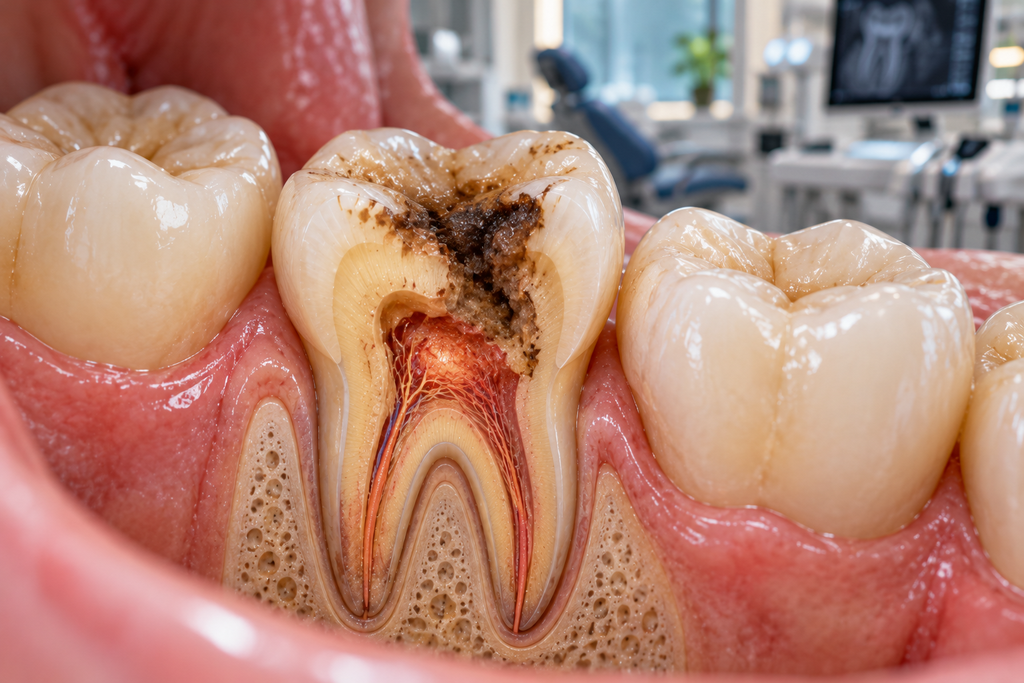
Tooth pain caused by deep decay can be distressing, particularly when the infection has reached the pulp or tissues around the root. Many patients assume that root canal treatment simply means cleaning the tooth and filling it on the same day.
However, some infected and inflamed teeth may benefit from a staged, two-visit approach.
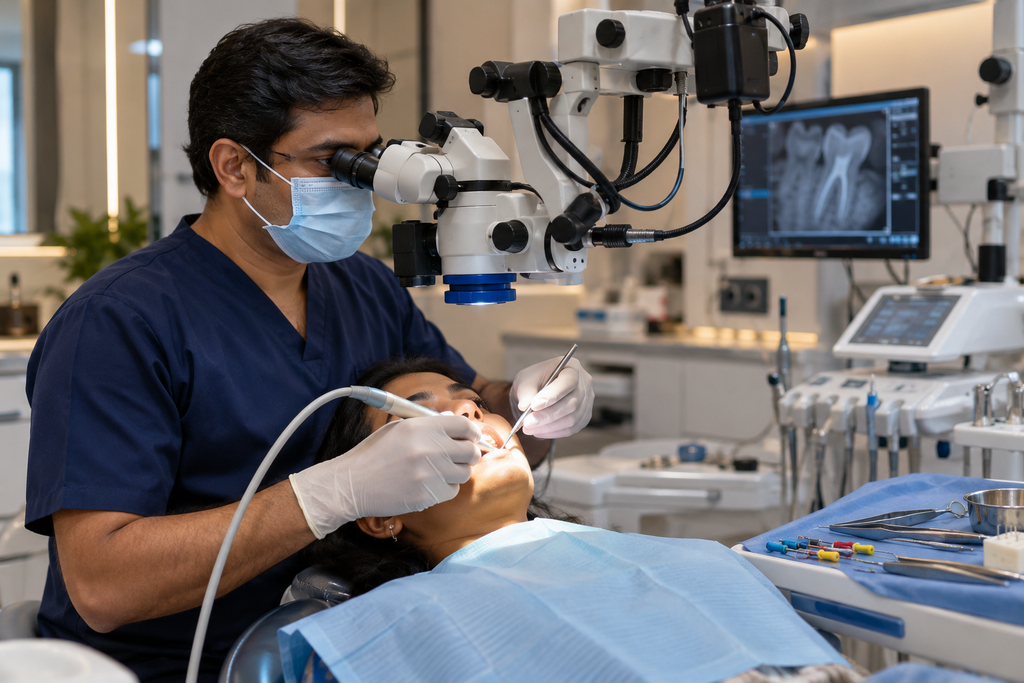
At Sri Sai Dental Clinic, Avinashi Road, Coimbatore, the treatment plan for an affected tooth is determined according to its clinical condition, symptoms, anatomy and response to initial treatment. In appropriate cases, treatment may involve an initial appointment focused on cleaning and infection control, followed by a second appointment for definitive root canal filling once the symptoms have settled.
The objective is straightforward:
Control infection first. Allow the tissues to settle. Then complete the root canal with an appropriate seal and restoration.
Why Might a Root Canal Be Planned Over Two Visits?
A tooth with deep caries may develop significant inflammation of the pulp or pulpal necrosis. Infection can also extend through the root canal system towards the tissues around the root.
In these situations, immediately completing the root canal may not always be the preferred approach.
A staged treatment protocol allows the clinician to:
- Assess the extent of the problem
- Clean and disinfect the canal system
- Reduce the microbial load
- Place intracanal medication
- Monitor the patient’s symptoms
- Reassess the tooth before definitive obturation
The underlying principle is to establish appropriate infection control before permanently sealing the root canal system.
Step 1: Diagnosis and Treatment Planning
The first stage is understanding exactly what is happening inside and around the tooth.
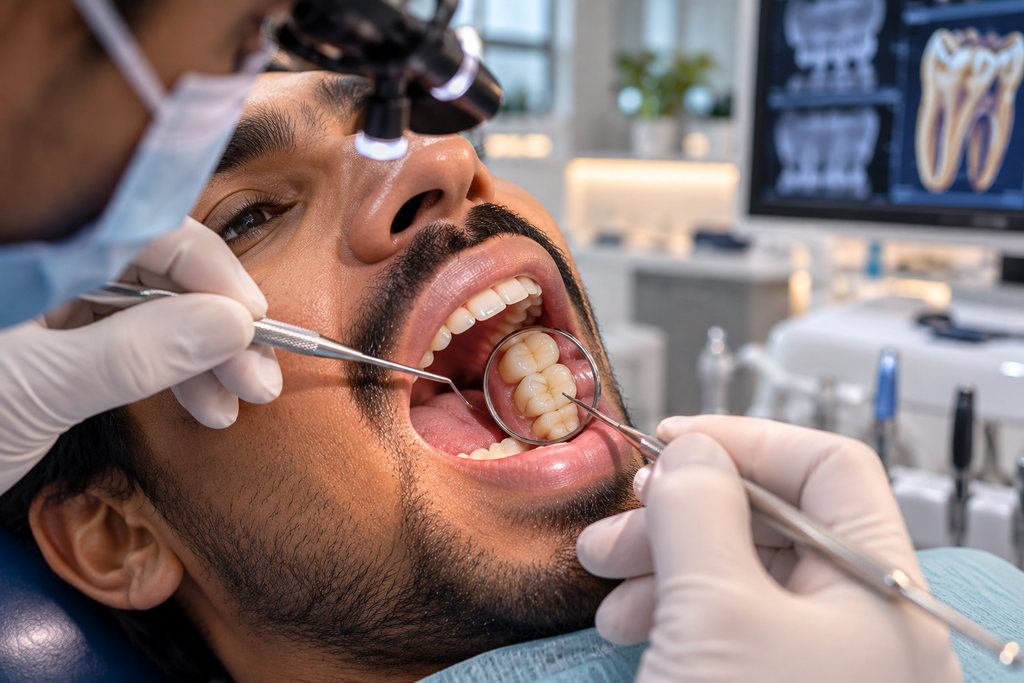
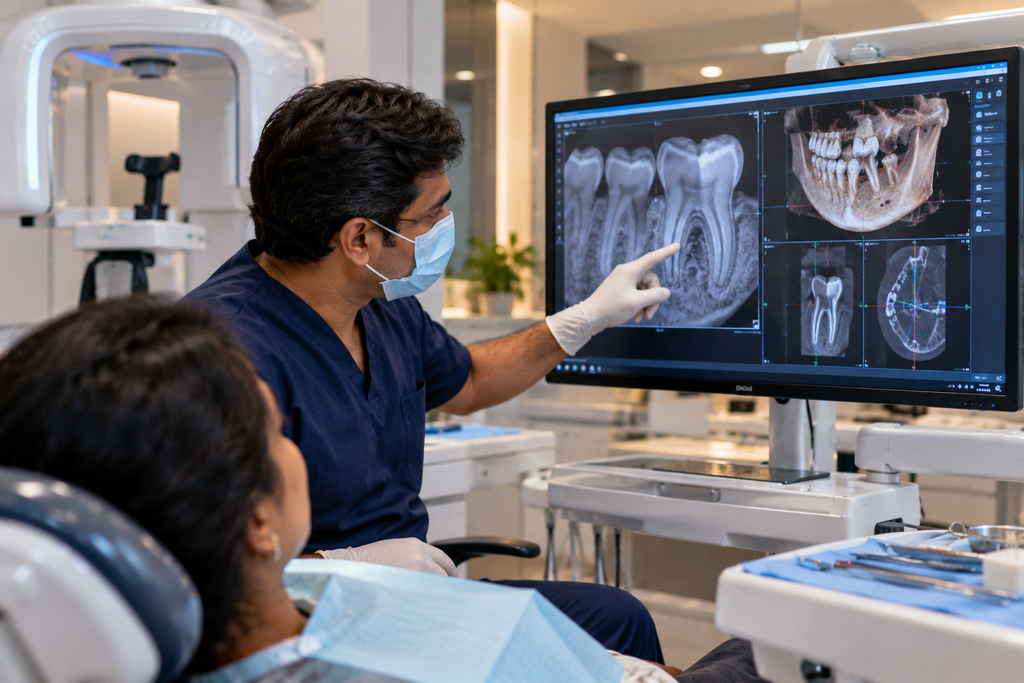
A periapical radiograph is an important diagnostic tool for evaluating the tooth and surrounding tissues.
When the anatomy or pathology cannot be adequately understood from conventional imaging, CBCT may be considered when clinically justified and available.
CBCT can provide additional three-dimensional information regarding:
- Root and canal anatomy
- Periapical changes
- Anatomical complexity
- The relationship of the tooth to important surrounding structures
The purpose of imaging is not simply to obtain another picture. It is to help the clinician understand the anatomy and identify potential treatment considerations before starting the procedure.
Step 2: Accessing the Infected Canal System
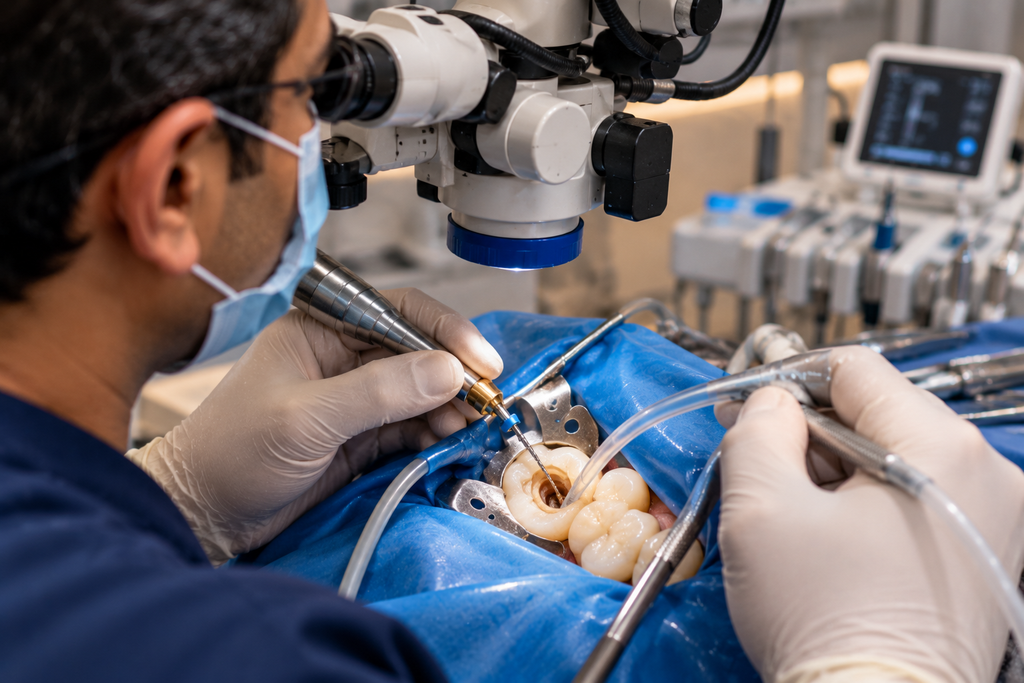
Once the tooth has been diagnosed and treatment is planned, an access opening is made to reach the pulp chamber.
The clinician then works towards establishing access to the root canal system and the appropriate working length.
This stage allows the infected and inflamed tissue within the canal system to be addressed.
The treatment objective is not simply to create an opening in the tooth.
It is to gain controlled access to the canal system so that effective cleaning and disinfection can take place.
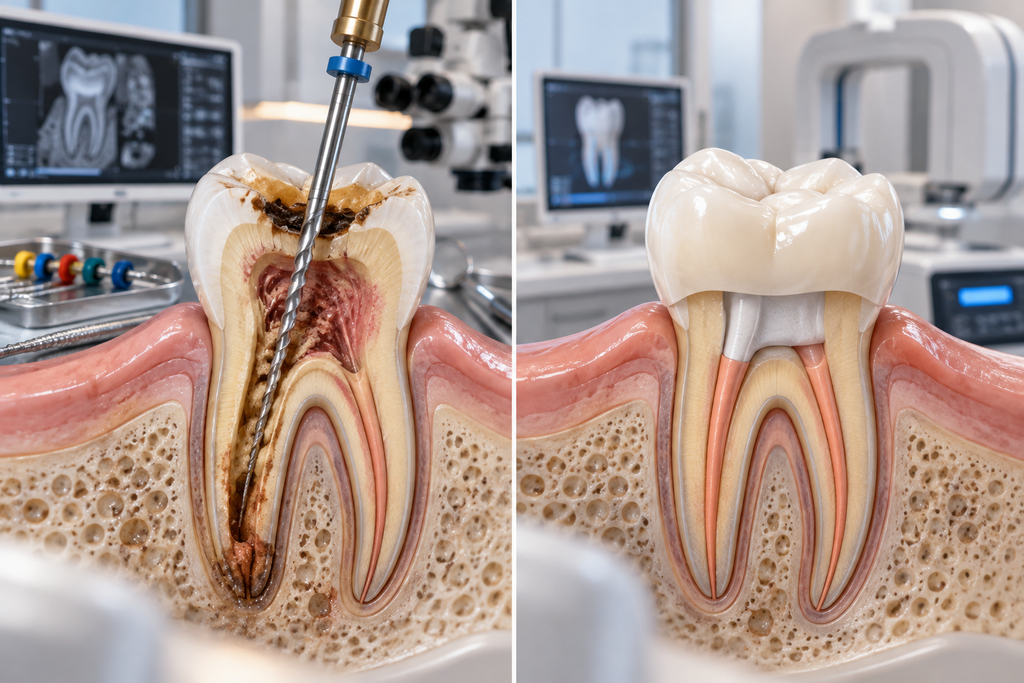
Step 3: Biomechanical Preparation and Irrigation
One of the most important stages of root canal treatment is biomechanical preparation (BMP).
During this stage, the canals are prepared to remove infected tissue and reduce the microbial load within the root canal system.
Irrigation plays an important role alongside mechanical preparation.
The overall objective is to achieve thorough cleaning of the canal system, including attention to areas that may be difficult to reach mechanically.
Particular attention is given to the apical portion of the canal, while respecting the surrounding anatomy and avoiding unwanted extrusion of materials beyond the root.
This combination of mechanical preparation and irrigation forms an important part of infection control.
Step 4: Intracanal Medication Between Visits
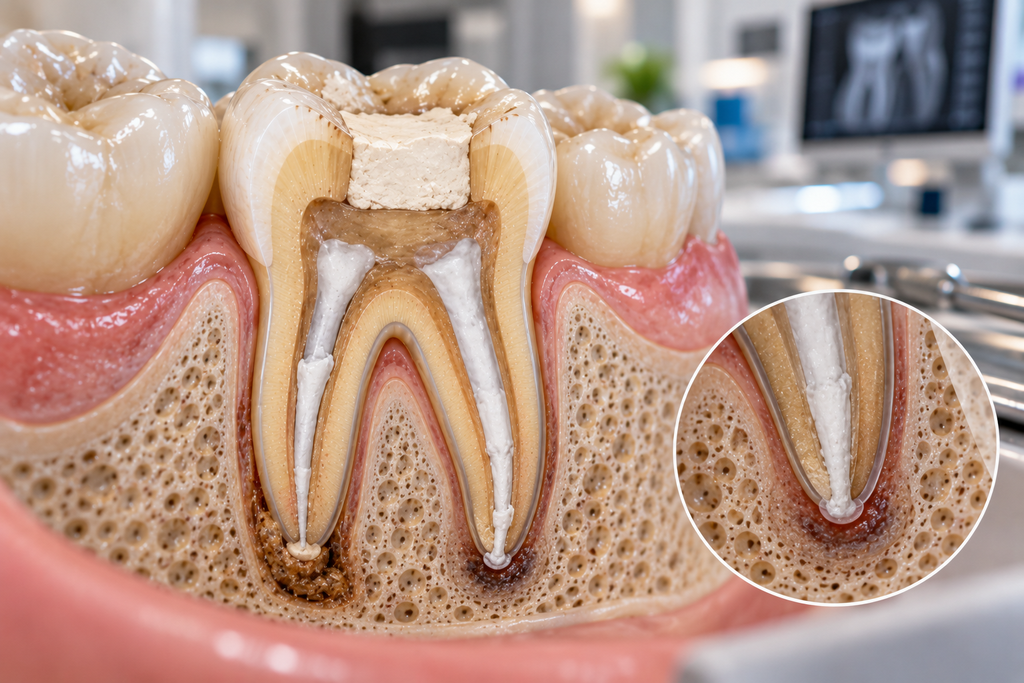
After the initial cleaning and irrigation, an intracanal medicament may be placed inside the prepared canal.
The protocol describes the use of a calcium-based intracanal medicament to assist with disinfection and management of inflammation between appointments.
The tooth is then temporarily sealed.
This creates an interval during which the treated tooth and surrounding tissues can settle.
The patient is also given appropriate instructions regarding symptoms and pain monitoring.
Why Not Fill the Root Canal Immediately?
This is one of the most important questions patients may have.
In an inflamed or infected tooth, the clinician may want to first establish better control of the infection and assess how the tooth responds.
The two-visit approach therefore introduces an important clinical decision gate.
At the second appointment, the symptoms are reassessed.
If the pain and symptoms have resolved:
The canals can be re-cleaned and definitive root canal treatment can proceed.
If significant symptoms remain:
The intracanal medication may be renewed and definitive obturation may be deferred until the tooth has settled appropriately.
This symptom-based decision-making is an important feature of the staged protocol.
Step 5: Second Visit — Re-Cleaning and Obturation
When the tooth has responded appropriately, the treatment proceeds to its definitive stage.
The canals are re-cleaned and prepared for obturation, which is the process of filling the prepared root canal system.
The objective is to achieve an effective, fluid-tight seal throughout the treated canal system.
A good seal is important because spaces or leakage pathways can allow microorganisms to persist or re-enter the treated canal system.
In simple terms, the final filling is intended to close the treated canal system and reduce the opportunity for reinfection.
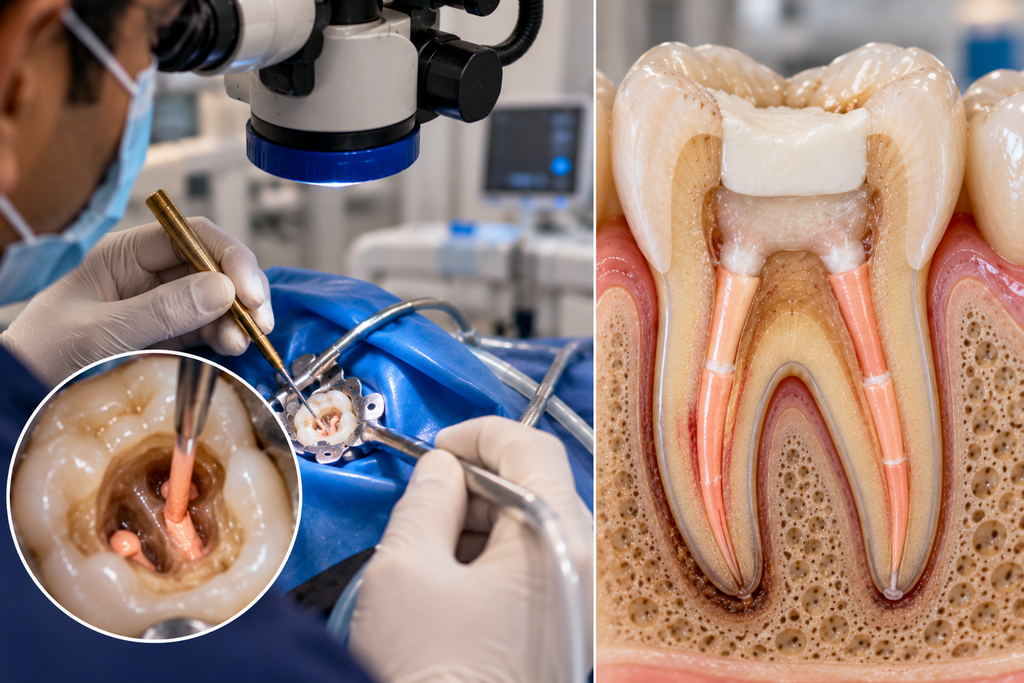
The Importance of Apical Anatomy
The area around the root tip, or apical region, requires particular attention during endodontic treatment.
The clinician must consider the anatomy of the apical third and the relationship of the tooth to surrounding structures.
The protocol specifically highlights the importance of respecting vascular proximity and apical anatomy.
This helps guide treatment decisions and minimize the risk associated with extrusion of materials or unnecessary irritation of surrounding tissues.
Careful diagnosis and treatment planning are therefore important components of predictable endodontic care.
What Happens If the Tooth Is Still Painful at the Second Visit?
Persistent symptoms do not necessarily mean that the treatment has failed.
The staged protocol specifically uses the patient’s clinical response as a decision point.
If significant pain or symptoms remain, definitive obturation can be postponed and intracanal medication may be continued or renewed.
The objective is to avoid rushing into permanent sealing when the clinical condition indicates that further infection control may be necessary.
This is an important distinction:
The second appointment is not simply a predetermined date to fill the tooth. It is a reassessment point.
Why Is Thorough Disinfection So Important?
A root canal system can contain microorganisms and infected tissue that contribute to inflammation and persistent symptoms.
If disinfection is inadequate, residual infection may contribute to continued symptoms or treatment complications.
The staged approach therefore emphasizes:
Diagnosis → Access → Cleaning → Irrigation → Medication → Reassessment → Re-cleaning → Obturation
Each stage has a specific purpose.
The overall objective is to reduce microbial contamination and then create an effective seal after the tooth has responded appropriately.
What Happens After Root Canal Treatment?
Completing the root canal is not necessarily the end of the treatment process.
The remaining tooth structure needs to be evaluated and restored appropriately.
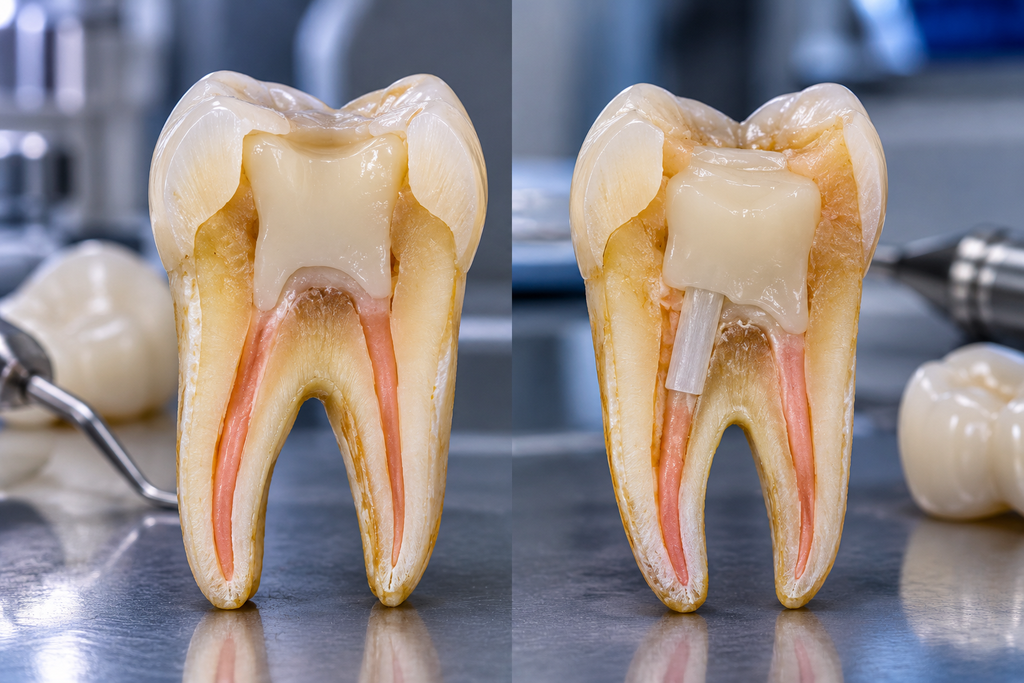
Depending on the amount of tooth structure remaining, the tooth may require a core buildup and definitive crown for protection.
Importantly, as discussed in our restorative protocol, not every root-canal-treated tooth automatically requires a post. A post is considered when the remaining tooth structure is insufficient to retain the core.
The final restorative plan should therefore be determined according to the individual tooth rather than following a one-size-fits-all approach.
Why Choose Sri Sai Dental Clinic for Root Canal Treatment in Coimbatore?
At Sri Sai Dental Clinic, Avinashi Road, Coimbatore, our approach to endodontic treatment combines clinical assessment, appropriate imaging, structured treatment sequencing and restorative planning.
Our clinic has access to advanced digital dental technology, including:
- CBCT imaging
- Intraoral scanning
- Digital dental workflows
- 3D printing technology
- Advanced treatment-planning capabilities
These technologies are used when clinically appropriate to support diagnosis and treatment planning.
Our multidisciplinary dental team includes expertise in prosthodontics, implantology, maxillofacial surgery, preventive dentistry and cosmetic dentistry, allowing restorative requirements to be considered alongside the endodontic treatment.
Is a Two-Visit Root Canal Better for Everyone?
Not necessarily.
The number of appointments required for root canal treatment depends on the individual tooth, its condition, symptoms, anatomy and clinical response.
The two-visit protocol described here is particularly focused on cases where infection, inflammation and symptoms need to be controlled before definitive obturation.
Treatment should therefore be individualized rather than assuming that every root canal must be completed in one visit or exactly two visits.
Frequently Asked Questions
Does every root canal require two visits?
No. The number of visits depends on the clinical condition of the tooth and the treatment strategy selected by the dentist.
Why is medication placed inside the tooth between visits?
Intracanal medication can be used to assist with disinfection and management of inflammation between appointments.
What happens if my tooth still hurts at the second visit?
The tooth may be reassessed and intracanal medication may be continued or renewed rather than proceeding immediately to definitive obturation.
Is CBCT required for every root canal?
No. A periapical radiograph is an important primary diagnostic tool. CBCT may be considered when additional three-dimensional information about anatomy, pathology or surrounding structures is clinically justified.
What happens after the root canal is completed?
The tooth is evaluated for appropriate restoration. Depending on the remaining tooth structure, a core restoration and definitive crown may be recommended to protect the tooth.
Conclusion
A root canal is more than simply filling an empty space inside a tooth.
For an infected or significantly inflamed tooth, successful management involves accurate diagnosis, controlled access, thorough biomechanical preparation, irrigation, appropriate intracanal medication, symptom reassessment and effective definitive obturation.
A two-visit approach can provide an important opportunity to assess the tooth’s response before permanently sealing the root canal system.
At Sri Sai Dental Clinic, Avinashi Road, Coimbatore, our aim is to approach each tooth according to its individual clinical requirements while prioritizing infection control, preservation of the natural tooth and appropriate long-term restoration.
Experiencing persistent tooth pain? Don’t wait for the problem to worsen. Consult our dental team for an evaluation.
Sri Sai Dental Clinic
No. 2, Vetrivel Nagar, Civil Aerodrome Post, Avinashi Road, Coimbatore – 641014
Phone: +91 94427 09568